
Table of Contents
ToggleVR gaming trends 2026 are shaping up to redefine how players experience virtual worlds. The industry has moved past early adoption struggles. Now, major hardware improvements and software innovations are pushing VR gaming into mainstream territory. This year brings significant changes across headset technology, social features, and immersive experiences. Players can expect more accessible devices, smarter AI integration, and multiplayer environments that feel genuinely connected. Here’s what the VR gaming landscape looks like in 2026 and why it matters for gamers everywhere.
Key Takeaways
- Standalone VR headsets dominate 70% of the consumer market in 2026, offering better affordability ($300–$500), 4K resolution per eye, and 3–4 hours of battery life.
- Mixed reality gaming solves motion sickness issues by blending virtual objects with real-world environments, now representing 25% of new VR releases.
- Social VR has matured into a genuine platform for connection, with advanced avatar tracking, spatial audio, and cross-platform play breaking down hardware barriers.
- Haptic gloves and vests have reached consumer-friendly prices under $500, allowing players to physically feel textures, impacts, and resistance in virtual worlds.
- AI-driven personalization is transforming VR gaming trends 2026 by enabling dynamic NPC conversations, procedural content generation, and real-time difficulty adjustments.
- VR gaming trends 2026 mark a shift from early adoption struggles to mainstream accessibility through improved hardware, smarter software, and more immersive experiences.
Standalone Headsets Continue to Dominate
Standalone VR headsets remain the most popular choice for gamers in 2026. These devices don’t require a PC or external sensors. Players simply put them on and start playing.
Meta’s Quest line continues to lead sales figures. The company has shipped over 20 million units since launching the Quest 3. Sony’s PlayStation VR2, while tethered, maintains a strong position among console gamers. Meanwhile, new entrants like ByteDance’s Pico and Samsung’s rumored headset are increasing competition.
What makes standalone headsets so appealing? Price and convenience. Most quality standalone devices now cost between $300 and $500. That’s a significant drop from the $1,000+ setups required just a few years ago. Setup takes minutes instead of hours.
Battery life has improved dramatically. Current models offer 3-4 hours of continuous play. Quick-charge features add an hour of gameplay in just 15 minutes. Display resolution has reached 4K per eye on premium models, eliminating the “screen door effect” that plagued earlier generations.
VR gaming trends 2026 show standalone devices capturing over 70% of the consumer market. This dominance will likely continue as processing power improves and prices drop further.
Mixed Reality Gaming Takes Center Stage
Mixed reality (MR) gaming is one of the biggest VR gaming trends 2026 has delivered. MR blends virtual objects with the real world. Players see their actual room while digital elements appear within it.
Apple’s Vision Pro popularized this concept in 2024. Now every major headset manufacturer includes MR capabilities. Games designed specifically for mixed reality are flooding the market.
Imagine playing a tower defense game where enemies crawl across your actual coffee table. Or a fitness game where virtual obstacles appear in your living room. These experiences feel different from traditional VR. They’re less isolating and more practical for smaller spaces.
Developers have embraced MR because it solves a key problem: motion sickness. When players can see their real environment, their brain handles movement better. This opens VR gaming to people who previously couldn’t tolerate it.
The technology uses advanced passthrough cameras and depth sensors. Current headsets render the real world in full color with minimal lag. Some premium devices achieve such high fidelity that users forget they’re wearing a headset.
MR gaming titles now represent about 25% of new VR releases. That percentage keeps growing as developers explore creative possibilities.
Social VR and Multiplayer Experiences Expand
Social VR has evolved from a novelty into a genuine platform for connection. VR gaming trends 2026 emphasize multiplayer experiences that bring people together regardless of physical location.
VRChat and Rec Room continue to attract millions of daily users. But the landscape has expanded. Major gaming studios now build social features directly into their VR titles. Playing alone feels like the exception rather than the rule.
Virtual concerts, movie watching parties, and collaborative games have become standard. Fortnite’s VR mode hosts events with thousands of simultaneous players. Meta’s Horizon Worlds has improved significantly after years of criticism.
Avatar technology has made social interactions more natural. Full-body tracking captures gestures and posture. Facial tracking reads expressions in real time. When someone smiles in VR, their avatar smiles too. These details make conversations feel more human.
Voice chat quality has improved through spatial audio. Sounds come from specific directions based on where other players stand. This mimics real-world acoustics and makes group conversations manageable.
Cross-platform play has expanded social VR’s reach. PC users, standalone headset owners, and even smartphone users can often share the same virtual space. This breaks down barriers between different hardware ecosystems.
The social aspect of VR gaming trends 2026 points toward virtual spaces becoming legitimate meeting places, not just for gaming, but for genuine social interaction.
Advances in Haptic Feedback and Immersion
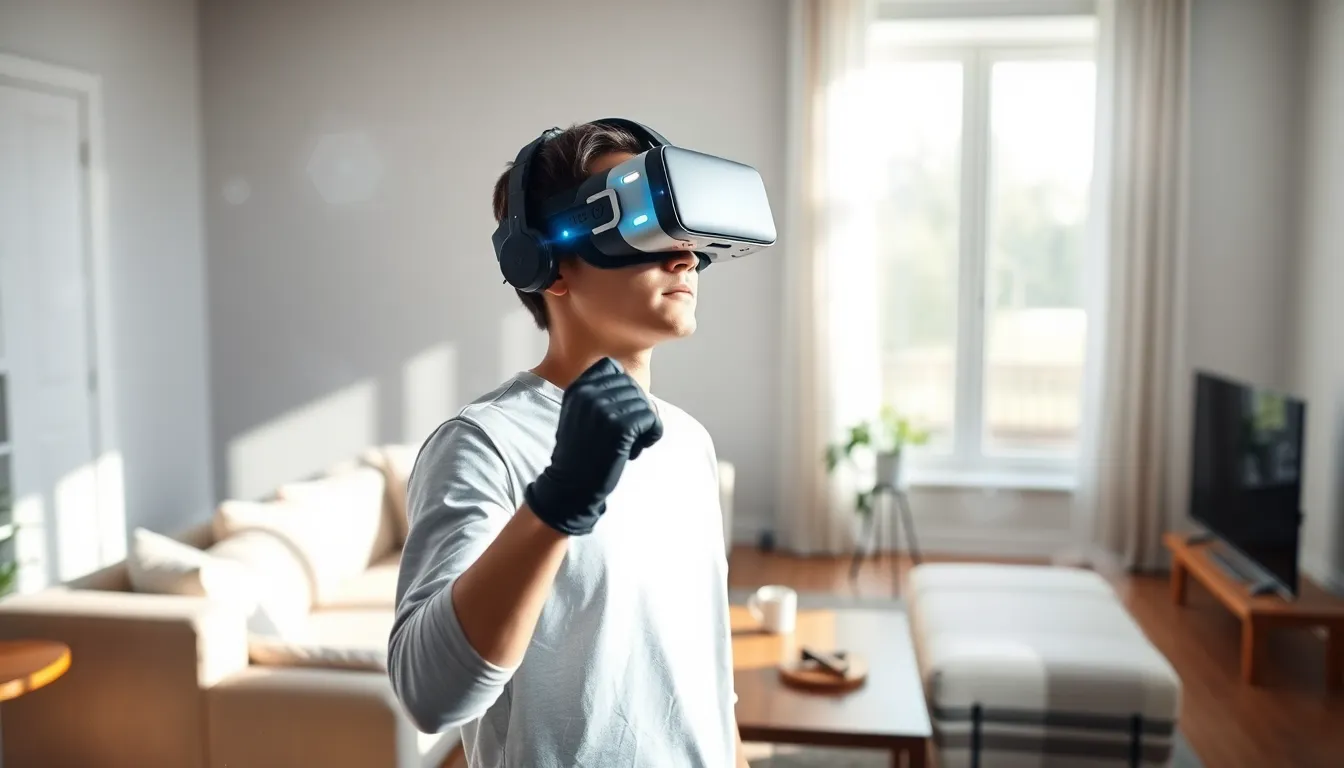
Haptic technology has transformed how VR gaming feels, literally. VR gaming trends 2026 include significant advances in touch feedback that make virtual experiences more convincing.
Haptic gloves have reached consumer-ready pricing. Models from companies like HaptX and bHaptics now cost under $500. These devices simulate the sensation of touching objects. Players feel the texture of surfaces, the weight of items, and the resistance of buttons.
Haptic vests add another layer of immersion. Getting hit in a shooter game produces a localized vibration on the player’s body. Driving games simulate the rumble of engines. Horror games… well, they’ve become significantly more intense.
Controller haptics have improved beyond simple vibration. Sony’s DualSense technology, adapted for VR, provides nuanced feedback. Drawing a bowstring feels different from pulling a trigger. Touching water feels different from touching metal.
Full-body haptic suits exist but remain expensive for most consumers. Prices hover around $2,000-$5,000. But, modular systems let players add pieces over time, gloves first, then vest, then leg attachments.
These haptic advances address a fundamental challenge in VR: the disconnect between seeing something and feeling nothing. When visual and tactile senses align, the brain accepts virtual environments more readily.
The immersion improvements from haptic technology represent some of the most exciting VR gaming trends 2026 has produced.
AI-Driven Content and Personalization
Artificial intelligence is reshaping VR game design. VR gaming trends 2026 show AI creating more dynamic, personalized experiences than ever before.
Non-player characters (NPCs) now hold actual conversations. Large language models power these interactions. Players can ask questions, negotiate, or just chat, and NPCs respond appropriately. This changes how stories unfold. Each playthrough feels unique because dialogue isn’t scripted.
Procedural generation has become more sophisticated. AI creates environments, quests, and challenges based on player preferences. Someone who enjoys exploration gets larger maps with hidden secrets. Someone who prefers combat encounters more enemies and varied weapons.
Difficulty adjustment happens in real time. AI monitors player performance and tweaks challenges accordingly. Struggling with a boss? The AI might subtly reduce its damage output. Breezing through levels? Expect smarter enemy behavior.
Personalization extends to accessibility. AI analyzes how players move and adjusts comfort settings automatically. Motion sickness triggers get detected and addressed before players even notice discomfort.
Some concerns exist around AI-generated content. Quality can vary. Not every AI-created quest matches hand-crafted design. But the technology improves monthly. The best implementations blend AI generation with human curation.
VR gaming trends 2026 suggest AI will become invisible infrastructure, present everywhere but noticed only when it’s absent.


