
Table of Contents
ToggleVR gaming puts players inside a virtual world instead of viewing it on a flat screen. This technology uses headsets, motion controllers, and sensors to create immersive experiences that respond to a player’s movements. Whether someone wants to swing a lightsaber, explore alien planets, or solve puzzles in 3D space, VR gaming offers something traditional gaming simply can’t match.
The VR gaming market has grown rapidly over the past few years. In 2024, the global VR gaming market reached approximately $22 billion, with projections suggesting continued expansion through 2030. This guide explains how VR gaming works, what equipment players need, and what to expect from this exciting form of entertainment.
Key Takeaways
- VR gaming immerses players inside virtual worlds using headsets, motion controllers, and spatial tracking that respond to real physical movements.
- The global VR gaming market reached approximately $22 billion in 2024 and continues to expand rapidly.
- Entry-level VR gaming starts around $300–$500 with standalone headsets like the Meta Quest 3, while premium PC setups can exceed $2,000.
- Popular VR game genres include rhythm games like Beat Saber, horror titles, social platforms, flight simulators, and fitness-focused experiences.
- VR gaming offers unique benefits like physical activity and deep immersion, but drawbacks include potential motion sickness, space requirements, and shorter play sessions.
- Most VR gaming setups require a minimum play area of about 6.5 feet by 6.5 feet for the best experience.
How VR Gaming Works
VR gaming creates the illusion of presence inside a digital environment. The technology relies on three main components: visual immersion, spatial tracking, and interactive input.
Visual Immersion
VR headsets display two slightly different images, one for each eye. This creates stereoscopic 3D vision, the same principle that gives humans natural depth perception. Modern VR gaming headsets refresh these images 90 to 120 times per second, which reduces motion sickness and creates smooth visuals.
The screens sit just inches from the player’s eyes, but special lenses make objects appear at natural distances. When a player turns their head, sensors detect the movement and update the display instantly. This creates the feeling of actually being inside the game world.
Spatial Tracking
VR gaming systems track the player’s position and movements in physical space. Some headsets use external sensors or cameras placed around the room. Others, like the Meta Quest 3, use inside-out tracking with cameras built into the headset itself.
This tracking allows players to walk around, duck behind cover, or lean around corners. The virtual environment responds to real physical movements, which makes VR gaming feel fundamentally different from playing with a controller on a couch.
Interactive Input
Motion controllers let players interact with virtual objects using their hands. Players can grab items, throw objects, aim weapons, and make gestures. Some VR gaming setups also support hand tracking without controllers, detecting finger movements through cameras on the headset.
These three elements combine to trick the brain into feeling present somewhere else. That sense of presence is what makes VR gaming so compelling, and sometimes so intense.
Essential VR Gaming Equipment
Getting started with VR gaming requires some specific hardware. The good news: entry points exist at various price levels.
VR Headsets
The headset is the core piece of VR gaming equipment. Current popular options include:
- Meta Quest 3 – A standalone headset that doesn’t require a PC. It costs around $500 and runs games directly on the device. Players can also connect it to a gaming PC for more demanding titles.
- PlayStation VR2 – Sony’s headset works exclusively with the PlayStation 5. It offers excellent graphics and uses the console’s processing power.
- Valve Index – A premium PC VR option with high refresh rates and precise finger tracking on its controllers. The full kit costs over $1,000.
- HTC Vive XR Elite – A versatile option that works standalone or connected to a PC.
Gaming PC (For Tethered VR)
PC-based VR gaming requires a capable computer. Most VR games need at least an NVIDIA RTX 2060 or equivalent GPU, 16GB of RAM, and a modern processor. Higher-end headsets like the Valve Index benefit from even more powerful hardware.
Play Space
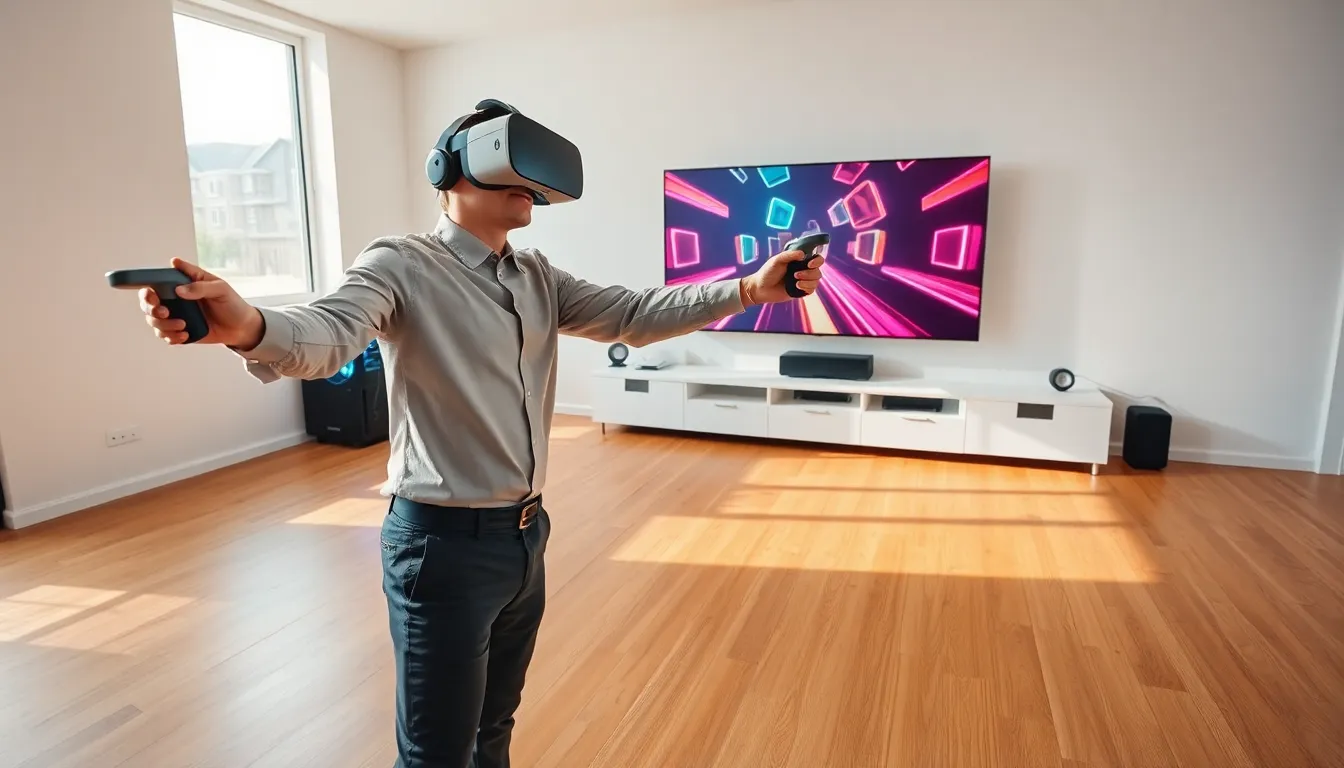
VR gaming works best with some room to move. Most games need a minimum play area of about 6.5 feet by 6.5 feet. Some seated VR experiences require less space.
Optional Accessories
Dedicated VR gaming fans often add accessories like:
- Rechargeable battery packs
- Prescription lens inserts
- Better head straps for comfort
- VR-specific earphones
- Full-body tracking sensors
Popular Types of VR Games
VR gaming spans many genres. Some categories work especially well in virtual reality.
Action and Rhythm Games
Beat Saber remains one of the best-selling VR games of all time. Players slice through blocks with virtual lightsabers in time with music. It’s a perfect example of how VR gaming turns physical movement into gameplay.
Other action titles like Superhot VR use time-bending mechanics, time only moves when the player moves, creating intense combat puzzles.
Horror Games
VR gaming amplifies horror like no other medium. When monsters appear in VR, they feel genuinely present. Resident Evil 4 VR and Phasmophobia have become fan favorites. Fair warning: these games aren’t for everyone. The immersion can feel overwhelming.
Simulation and Social Games
VRChat and Rec Room let players hang out in virtual spaces, play mini-games, and meet people worldwide. These social VR gaming platforms have built substantial communities.
Simulation fans enjoy titles like Microsoft Flight Simulator VR, where sitting in a virtual cockpit adds genuine immersion to flying.
Adventure and Exploration
Half-Life: Alyx showed what AAA VR gaming could look like. The game lets players physically interact with nearly everything in its detailed environments. Exploration games like Moss put players into miniature fantasy worlds, combining third-person gameplay with VR’s unique perspective.
Fitness Games
Many people use VR gaming as exercise. Games like Supernatural and FitXR offer guided workouts disguised as games. Players burn real calories while having fun, something traditional gaming rarely offers.
Benefits and Drawbacks of VR Gaming
VR gaming offers distinct advantages over traditional gaming, but it also comes with limitations worth considering.
Benefits
- Immersion – Nothing matches the feeling of being inside a game world. VR gaming creates presence that flat screens can’t replicate.
- Physical Activity – Many VR games require real movement. Players duck, swing, and step around their play space. This makes VR gaming more active than sitting with a controller.
- New Gameplay Possibilities – Interacting with objects using actual hand movements opens design possibilities impossible on traditional platforms.
- Social Connection – Social VR platforms let people interact in ways that feel more natural than voice chat in regular games.
Drawbacks
- Motion Sickness – Some people experience nausea in VR, especially during locomotion (virtual movement that doesn’t match physical movement). Most users adapt over time, but it remains a real barrier.
- Cost – Entry into VR gaming requires either a standalone headset or a capable gaming PC plus a tethered headset. The investment ranges from $300 to $2,000+.
- Space Requirements – VR gaming needs physical room. Not everyone has space for a dedicated play area.
- Session Length – Wearing a headset for hours can cause discomfort. Most VR gaming sessions last 30 minutes to two hours before players need a break.
- Library Size – While VR gaming has many great titles, the total library remains smaller than traditional gaming platforms.
These trade-offs explain why VR gaming appeals strongly to some players while others prefer traditional gaming. Neither approach is objectively better, they offer different experiences.


