
Table of Contents
ToggleConsole gaming remains one of the most popular ways to play video games in 2025. Millions of players worldwide choose consoles for their ease of use, exclusive titles, and living room appeal. Whether someone is a first-time buyer or a seasoned gamer looking to upgrade, understanding the console landscape helps make better purchasing decisions.
This guide covers everything from the history of gaming consoles to current hardware options and future trends. Readers will learn how to pick the right system, which accessories matter, and what changes lie ahead for console gaming enthusiasts.
Key Takeaways
- Console gaming remains hugely popular in 2025, with Sony, Microsoft, and Nintendo offering distinct experiences for different player types.
- The PlayStation 5, Xbox Series X/S, and Nintendo Switch each excel in different areas—exclusive games, subscription value, and portability respectively.
- When choosing a console, consider your budget, preferred game genres, what your friends play, and whether you want physical or digital games.
- Game Pass and other subscription services are transforming how players access console gaming libraries for a predictable monthly cost.
- Essential accessories like extra controllers, quality headsets, and external storage significantly enhance the console gaming experience.
- Cloud gaming, longer hardware cycles, and cross-platform play are shaping the future of console gaming through 2027 and beyond.
The Evolution of Gaming Consoles
Console gaming has come a long way since the 1970s. The Magnavox Odyssey launched in 1972 as the first home video game console. It offered simple graphics and basic gameplay, but it started a revolution.
Atari dominated the late 1970s and early 1980s with the Atari 2600. This console brought arcade-style games into living rooms across America. But, the video game crash of 1983 nearly killed the industry.
Nintendo revived console gaming with the NES in 1985. The company introduced quality control standards and iconic franchises like Super Mario Bros. and The Legend of Zelda. Sega entered the market with the Genesis in 1988, creating the first major console war.
The 1990s brought 3D graphics and CD-based games. Sony launched the PlayStation in 1994 and quickly became the market leader. The Nintendo 64 and Sega Saturn competed for players’ attention during this era.
Microsoft joined console gaming with the Xbox in 2001. This added a third major competitor and introduced features like built-in hard drives and online multiplayer through Xbox Live. The PlayStation 2 became the best-selling console of all time with over 155 million units sold.
The seventh generation brought high-definition graphics and motion controls. Nintendo’s Wii attracted casual gamers with its innovative motion controller. Sony and Microsoft pushed graphical power with the PS3 and Xbox 360.
Each generation of console gaming has improved on the last. Processing power, storage capacity, and online features have grown dramatically over five decades.
Current Generation Consoles Worth Considering
Three major companies dominate console gaming today: Sony, Microsoft, and Nintendo. Each offers distinct experiences for different types of players.
PlayStation 5
Sony’s PlayStation 5 delivers powerful hardware and exclusive games. The console features a custom SSD that loads games in seconds. Exclusive titles like Spider-Man 2, God of War Ragnarök, and Final Fantasy XVI attract players to the platform. The DualSense controller offers haptic feedback and adaptive triggers that make console gaming feel more immersive.
Xbox Series X and Series S
Microsoft offers two options for console gaming fans. The Series X provides 4K gaming and maximum power. The Series S costs less and targets 1440p resolution. Both consoles include Game Pass compatibility, which gives players access to hundreds of games for a monthly fee. Xbox also supports backward compatibility with thousands of older titles.
Nintendo Switch
Nintendo takes a different approach to console gaming. The Switch works as both a home console and a portable device. Players can dock it for TV play or take it on the go. Nintendo’s first-party games like Zelda: Tears of the Kingdom, Mario Kart 8, and Animal Crossing continue to sell millions of copies. The Switch OLED model offers a better screen for handheld play.
Choosing the Right Console for Your Needs
Picking the best console gaming system depends on several factors. Budget, game preferences, and play style all matter.
Consider the games you want to play. Each platform has exclusive titles. PlayStation offers single-player story games like The Last of Us and Horizon. Xbox focuses on shooters like Halo and racing games like Forza. Nintendo provides family-friendly options and unique gameplay experiences.
Think about your budget. Console gaming costs vary widely. The Xbox Series S starts around $299, making it the cheapest option. The PS5 and Xbox Series X cost $499 or more. Factor in the price of games, controllers, and online subscriptions.
Evaluate online services. PlayStation Plus, Xbox Game Pass, and Nintendo Switch Online offer different values. Game Pass provides the best library for a monthly fee. PlayStation Plus gives free monthly games and online access. Nintendo’s service costs less but offers fewer features.
Check what your friends play. Multiplayer console gaming is more fun with friends. If everyone in a social circle owns PlayStations, buying an Xbox might limit co-op options.
Consider physical vs. digital. Some console versions lack disc drives. Digital-only models cost less upfront but require buying all games online. Players who prefer physical collections should choose disc-based versions.
Essential Accessories and Setup Tips
The right accessories improve any console gaming setup. Some items are essential, while others enhance the experience.
Must-Have Accessories
- Extra controller: Console gaming with friends requires additional controllers. First-party options from Sony, Microsoft, and Nintendo offer the best quality.
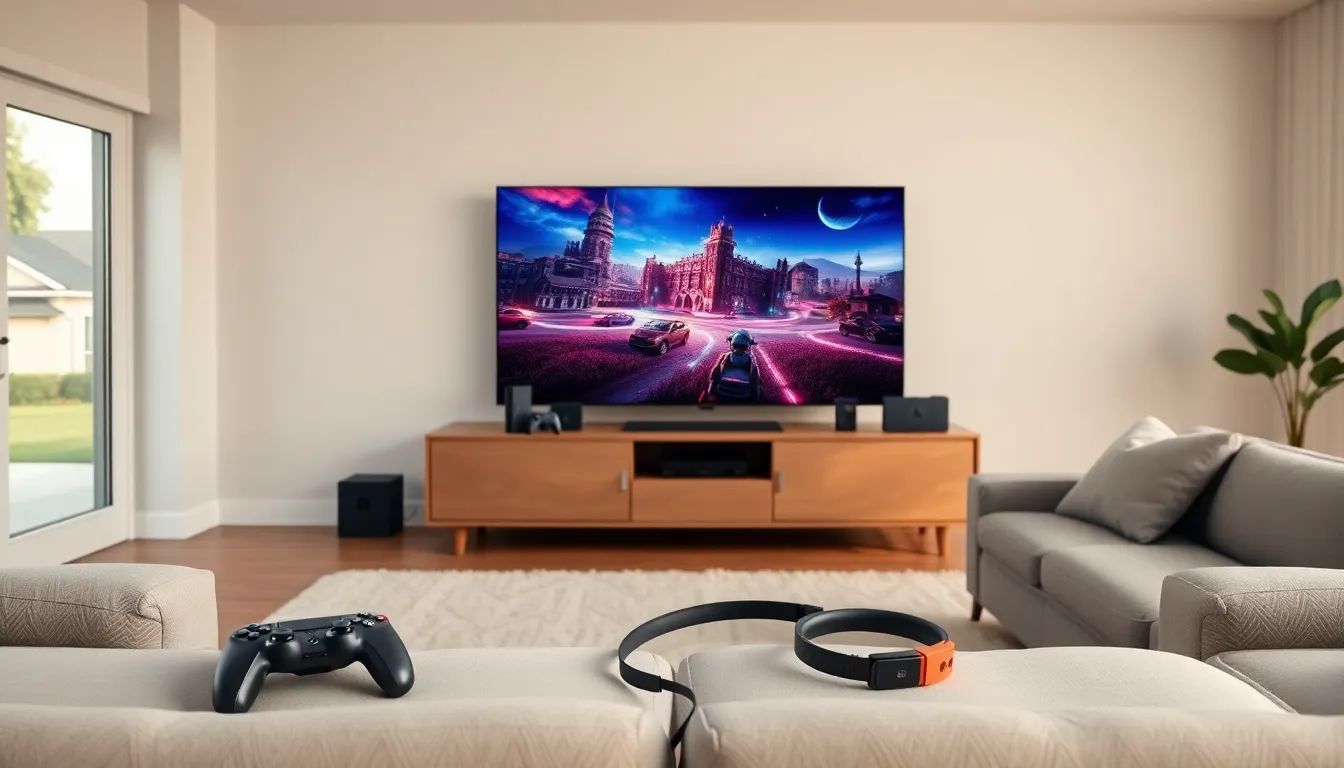
- Headset: A gaming headset improves audio and enables voice chat. Wired options work fine, but wireless headsets offer more freedom.
- External storage: Games keep getting bigger. An external hard drive or SSD expansion adds space for more titles.
Setup Tips for Better Performance
Place the console in a well-ventilated area. Heat buildup can cause performance issues or hardware damage. Keep at least four inches of clearance around vents.
Use a wired internet connection when possible. Ethernet cables provide faster, more stable connections than Wi-Fi for console gaming. This reduces lag during online play.
Connect to a 4K TV for the best visuals. Current generation consoles support 4K resolution and HDR. A good TV shows off these capabilities.
Enable game mode on the television. This setting reduces input lag and makes console gaming feel more responsive. Most modern TVs include this feature.
Keep the system software updated. Console manufacturers release patches that fix bugs and add features. Automatic updates ensure the system stays current.
The Future of Console Gaming
Console gaming continues to change as technology advances. Several trends will shape the industry in coming years.
Cloud gaming grows in importance. Services like Xbox Cloud Gaming and PlayStation’s cloud streaming let players access games without downloading. Internet speeds keep improving, making this option more viable. Some players may eventually skip consoles entirely and stream everything.
Subscription services expand. Game Pass has changed how people think about console gaming purchases. Sony and Nintendo have responded with their own subscription offerings. This model gives players access to large libraries for predictable monthly costs.
Hardware cycles may lengthen. The gap between console generations has grown from five years to seven or more. Mid-generation upgrades like the PS4 Pro extended the life of existing hardware. Future console gaming might follow a similar pattern.
VR integration deepens. PlayStation VR2 brought virtual reality to PS5 owners. As VR technology improves and costs drop, more console gaming experiences may incorporate immersive elements.
Cross-platform play becomes standard. Players increasingly expect to compete with friends on different systems. More games now support cross-play between PlayStation, Xbox, Nintendo, and PC.
The next generation of consoles likely won’t arrive until 2027 or later. Until then, current hardware will continue receiving new games and updates.


